

Thoughts of the almighty Amazon have the power to excite and delight travellers like few other places on Earth can. In our minds eye we picture thick natural rainforest with giant trees and an abundance of wildlife, isolated indigenous communities with painted faces and fresh, clean waterways filling the World’s largest river system. So imagine our initial disappointment on arrival in Manaus, the Amazon’s largest city (approx. 1.7 million population) to find a sprawling, dirty hot and humid metropolis seemingly devoid of any natural flora and fauna. The frenetic streets were choked by traffic and its streets filled with rubbish and unsavory characters. On face value Manaus had limited touristic appeal but it frequently finds its way onto traveller’s itineraries using it as a base to arrange jungle trips or considering it a destination in its own right. We realised that perhaps we’d set ourselves up for a fall, with expectations so high, that Manaus was always fighting a losing battle. We knew there must be more to the city than its face value so we set out to discover what Manaus was all about.
The Real Jurassic Park – Roraima
18 Jan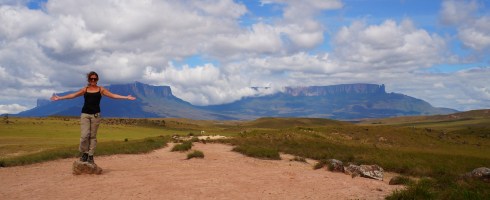
Welcome to Mount Roraima. A mystical table mountain cut off from civilisation with seemingly impenetrable four hundred metre sheer cliff faces from which tumble cascades of water. It looks like a floating island of rock ascending into the clouds. The mountain’s base is embraced by dense Amazonian jungle and beyond that golden savannah rolls into the distance. Its flat summit is a maze of unusual stone formations, caves, sandy beaches, coloured pools and valleys scattered with crystals. It’s a land that time forgot. A dream-like landscape with shifting mists and home to species of flora and animals found nowhere else on the planet. Thought to be the inspiration for Sir Arthur Conan Doyle’s novel “The Lost World” in which dinosaurs, cannibalistic plants and ape men still lived, this perfectly preserved ancient world remains to this day a real life ‘Jurassic Park’.
Canaima National Park – Finding a Lost World
14 Dec
Rugged, remote and insanely beautiful Canaima National Park stretches over three million hectares in south-eastern Venezuela along the border between Guyana and Brazil. Comparable in size to Belgium, this area is the sixth biggest national park in the world. It was established in 1962 and in just over a decade its protected areas more than doubled whilst being championed by scientists, geologists and historians. The small settlement of Canaima is a mixture of native village and tourist hub. It’s the jumping off point for Angel Falls, undeniably the highlight of any visit to the area, being the world’s highest uninterrupted waterfall at an enormous 979 metres but many will be surprised, as we were, to find that Canaima has plenty of attractions in its own right to offer tourists. Here’s our top 6 reasons why Canaima is worthy of spending an extra day or two exploring.
Angel Falls – Cascade from the Sky
10 Dec
Flying through uncharted Venezuelan territory in 1934 while looking for gold, American bush pilot Jimmie Angel nearly crashed his 4-seater plane upon noticing a waterfall nearly one kilometre high freely flowing from the top of towering Auyantepui, one of the area’s biggest table mountains. Little did Jimmy know he had discovered what would become known as ‘Angel Falls’, by far and away the highest single drop waterfall in the world, which cascades a massive 979 metres, more than double the height of the Empire State Building and 16 times the height of Niagara Falls.
A recipe for colonial beauty – Ville de Leyva
3 Apr
Take a good helping of cobblestones and mix well with white washed buildings topped by terracotta tiles. Add a pinch of colourful creeping plants and lightly stir in some locals steering horse-drawn carts. Make a space in the middle of your mixture for one of South America’s largest plazas and pour in a good amount of art and crafts. Whilst it’s warming in the temperate climate, sit back, relax, and breath in the aromas from French bakeries and cute coffee houses serving Colombia’s finest beans.
Wake up and smell the coffee – Colombia’s Zona Cafetera
3 Mar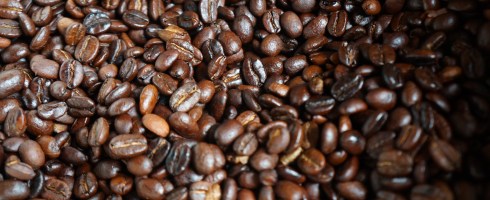
Growing truly exceptional coffee is one of the things Colombians do best. In fact their coffee is considered to be amongst the greatest in the world so we fully expected to be left wide-eyed and shaky with the amount we intended to drink in the country’s renowned bean growing region, aptly named Zona Cafetera.
Quilatoa crater lake
29 Jan
A clapped out old bus with rattling windows, faded velour seats and a never ending soundtrack of Andean pan pipes dropped us off in the small settlement of Quilatoa. The indigenous farming village didn’t look like much, just a cluster of basic brick and tin roof homes, but we’d learnt that this was the access point to one of Ecuador’s most spectacular sights – the unbelievably beautiful volcanic crater lake, Quilatoa.
Iquitos – a steamy jungle metropolis
27 Dec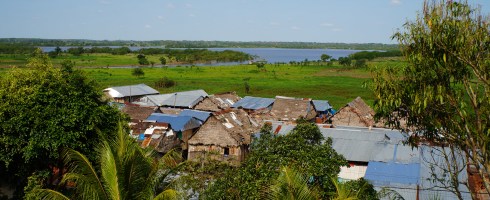
Iquitos is the largest city in the world which isn’t linked to the rest of its country by road and it’s best described as a sensual, steamy jungle metropolis with attitude. Despite its attractive promenade with wonderful river views, its historic buildings and leafy plaza with quaint eateries and coffee shops, Iquitos retains a working class identity with a somewhat edgy feel. We got the sense here that anything goes if you know the right guys and that the law of the jungle is very much alive and well.
Welcome

Featured posts
-

Torres del Paine – the ‘W’ trek
Visitors from all walks of life converge on the small hamlet of Puerto Natales to visit Chile’s and perhaps the Continent’s number one national park – Torres del Paine. Located in the Southern Patagonian ice fields at the end of the Andes, the park offers diverse wildlife and incredible mountain scenery, glaciers, lakes, rivers and […]
 latin chattin'