
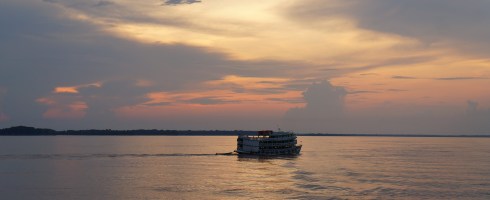
We couldn’t imagine a more romantic notion than swinging in hammocks as we travelled by cargo boat along the mythical Amazon river in Peru for three days, from Yurimaguas to Iquitos. We dreamed of glorious sunsets and steamy evenings drinking dark rum whilst watching a lightning storm flickering far in the distance. We hoped for pristine, unspoiled rainforest and close encounters with monkeys, pink river dolphins and manatees. We wondered if indigenous tribes wearing loin cloths and with bones through their noses would wave as we passed from a sandy riverside spot. Despite our optimism, we knew that this trip wouldn’t be for the faint hearted and would test our patience to the very limits. Known for their very basic conditions, frequent lengthy delays and notoriously grumpy captains, cargo boats are not a luxury form of travel but they do represent one of the world’s last great leaders in river transport and offer those with adventurous spirits no end of rewards. We took the plunge and held our breath for the boat ride of our lives!
Riding a sand tsunami in Huacachina
10 Nov
We collapsed into a heap after climbing to the top of a 60 metre sand dune and paused to catch our breath. We stared in awe at the scene before us – immense, golden dunes and nestled in the middle a picturesque lagoon-filled oasis surrounded by palm trees. Huacachina was once a prestigious holiday destination for Peru’s rich elite, however, nowadays it’s a regular stop on the Gringo trail and an adventure theme park for international backpackers.
The mysterious Nazca Lines
1 Nov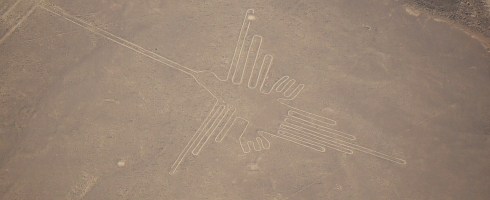
The mysterious Nazca Lines are spread over 500 square kilometres in a dusty, desert landscape in the South of Peru. The lines were first discovered in 1927 when a Peruvian archeologist, Toribio Mejia Xesspe, spotted them whilst walking in the nearby foothills, however, they were largely ignored by the outside world. In 1939, a historian from Long Island University in the United States took a flight over the area and upon seeing these giant lines and figures etched into the ground, he made it his duty to inform the world about them. Every year since, more formations have been discovered and there is presently a striking network of over 80 lines, 300 geometric figures and around 70 animals. In 1994 the site was honoured with UNESCO World Heritage status.
La Paz – The good, the bad and the ugly
19 Sep
La Paz, the highest capital city in the world, at an altitude of 3,660 metres above sea level, had us in a spin from the second we arrived. Approaching the city the empty, flat plains of El Alto go on endlessly until that special moment when you see the ground opening up and receive your first glance of La Paz sprawling in the deep valley below.
Bonito – the Caribbean of central Brazil
16 Sep
Bonito is a small, charming Brazilian town set on the edge of Parque National de Serra de Bodoquena – a beautiful nature-lovers paradise complete with dense forests, stalactite filled caves, crystal clear lakes bursting with fish and scenic waterfalls. Bonito and the Mato Grosso do Sul region have become increasingly popular as a tourist destination in the last few years, especially amongst holidaying Brazilians. We’d heard that out of peak season (December – February) Bonito was a laid back, friendly town and an excellent place to relax for a few days so we headed there after our trip to the Pantanal and before returning to Bolivia.
‘The mountain that eats men’ – Potosi
16 Aug
Potosi, the world’s highest city (4,068 metres) holds a terrible secret…it’s citizens have made a pact with the devil and they are literally working themselves to death. Fathers, husbands and sons work in the Potosi mines endlessly enduring dangerous, appalling, medieval-like conditions all for a few precious metals they may be able to extract and sell for a small profit. Continue reading
Ride ’em cowboy – Tupiza
13 Aug
The president waved and gave us a generous smile – two white faces in the front row, waving madly with excitement in a sea of Bolivians – we certainly stood out from the crowd! It was our fifth day in Bolivia and we’d arrived in a small town called Tupiza to find a beautifully decorated plaza, locals dressed in their Sunday best and an infectious hubbub on every street. It was so nice of them to give us such a warm welcome!
Desert oasis – San Pedro de Atacama
30 Jul
As our bus hurtled down the steep road from the altiplano, San Pedro de Atacama looked nothing more than a collection of mud huts and farms. However, we soon came to consider this place as our oasis in the middle of the Atacama desert.
Welcome

Featured posts
-

Torres del Paine – the ‘W’ trek
Visitors from all walks of life converge on the small hamlet of Puerto Natales to visit Chile’s and perhaps the Continent’s number one national park – Torres del Paine. Located in the Southern Patagonian ice fields at the end of the Andes, the park offers diverse wildlife and incredible mountain scenery, glaciers, lakes, rivers and […]
 latin chattin'