

Rugged, remote and insanely beautiful Canaima National Park stretches over three million hectares in south-eastern Venezuela along the border between Guyana and Brazil. Comparable in size to Belgium, this area is the sixth biggest national park in the world. It was established in 1962 and in just over a decade its protected areas more than doubled whilst being championed by scientists, geologists and historians. The small settlement of Canaima is a mixture of native village and tourist hub. It’s the jumping off point for Angel Falls, undeniably the highlight of any visit to the area, being the world’s highest uninterrupted waterfall at an enormous 979 metres but many will be surprised, as we were, to find that Canaima has plenty of attractions in its own right to offer tourists. Here’s our top 6 reasons why Canaima is worthy of spending an extra day or two exploring.
Angel Falls – Cascade from the Sky
10 Dec
Flying through uncharted Venezuelan territory in 1934 while looking for gold, American bush pilot Jimmie Angel nearly crashed his 4-seater plane upon noticing a waterfall nearly one kilometre high freely flowing from the top of towering Auyantepui, one of the area’s biggest table mountains. Little did Jimmy know he had discovered what would become known as ‘Angel Falls’, by far and away the highest single drop waterfall in the world, which cascades a massive 979 metres, more than double the height of the Empire State Building and 16 times the height of Niagara Falls.
Mochima National Park – Aquatic Adventures
31 Oct
Parque Nacional Mochina is Venezuela’s second oldest national park, created in 1973 to protect the beautiful coastline, offshore islands and marine life against the unregulated building of holiday homes. The pace of life is slow and laid back and many travellers make this a logical stop to or from an inland expedition to Angel Falls or Roraima and stay for longer than they planned. Scorched, rust coloured mountains dotted with cacti make for a beautiful backdrop and plunge into calm, shallow bays with golden beaches. The islands offer a chance to get away from it all and find tranquility in your own slice of tropical paradise. It’s a great spot to recharge your batteries, or, if adventure is your desire, diving, snorkelling and boat trips can easily be arranged.
Postcard from Henri Pittier National Park
14 Sep
Henri Pittier National Park has always been appreciated for its natural beauty and diverse ecosystems and in 1937 it became the first national park in Venezuela. It was created to protect the cloud forest and marine coastal environments from land clearance for agricultural purposes, and was quickly recognised for its great variety of plants and wildlife. The park covers 1078 square kilometres of rolling coastal mountain ranges, beautiful bays of golden sand and turquoise waters. It’s justifiably earned a top spot on any backpacker’s Venezuelan adventure. The park ticks all the right boxes with stunning coastlines, well preserved colonial villages with funky budget accommodation and tasty food options, trekking trails through lush mountains and the chance to spot rare animals and birds in the wild.
Struck by lightning – the Catatumbo phenomenon
27 Aug
They say that fact is often stranger than fiction and this was certainly the case with ‘Catatumbo’ – a mind blowing phenomenon found nowhere else in the world apart from the shores of Lake Maracaibo in Venezuela. It’s here where lightning strikes, almost nightly in season, but in complete silence, without any thunder. During intense periods, clouds can reach more than five kilometres in height and flashes are so bright and consistent (up to the 280 times per hour) it’s possible to write your travel journal by! We’d been reliably informed that mother nature puts on an unforgettable show that had to be seen with our own eyes to be believed.
The ride of your life – Paragliding in Merida
18 Aug
“Enjoy the ride of your life” advertised a large poster depicting an athletic young couple paragliding high above the Andean mountain city of Merida. We stopped in our tracks and stared at the image of them soaring gracefully in the sky, the wind in their hair whilst their tanned and toned bodies effortlessly manoeuvred the wing above their heads and before we could stop ourselves we were booking our own paragliding (tandem) flight. The reality, as we stood on the precipice with harnesses squeezing us in places not designed to be squeezed while strapped to the front of our instructor like baby kangaroos, was quite different. Red faces, sweaty palms and a total lack of co-ordination as our legs turned to jelly. “Are you ready?” yelled the instructor in our ears and just as we were about to shake our heads, we felt a force from behind and we were running down a mountain before launching ourselves off its steep side.
A tale of two cities…seperated by the world’s longest mountain range
10 Aug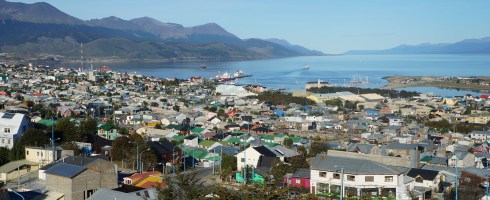
The Andes mountain range is one of the world’s most wondrous spectacles. It is the longest continental mountain range in the world stretching the entire west coast of South America for 4,500 miles or 7,242 kilometres and spanning seven countries – Argentina, Chile, Bolivia, Peru, Ecuador, Colombia and Venezuela. The range has the highest mountains on the planet, outside of the Himalayas, the tallest of which is Aconcagua in Argentina (6,962m), plus over 50 volcanos reaching 6,000 metres, including the world’s highest, Ojos del Salado (6,893m). Filled with glaciers, lakes, ski fields, the ruins of lost civilisations, thriving cities and indigenous communities amongst other things, these mountains truly are a special place. Our small claim to fame in all of this was travelling the whole length of this incredible range in just over 8 months – from the city of Ushuaia at the ‘world’s end’ in the south of Patagonia, to the city of Merida in the north of hot blooded Venezuela. Continue reading
Island hopping in Morrocoy National Marine Park
23 Jul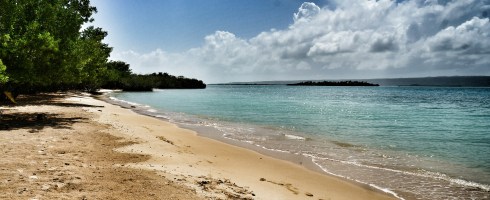
“Where you go today?” smiled our regular skipper as we climbed aboard his speedboat, brightly stencilled with a Bob Marley design. We paused for a moment before making another tough decision – which tropical island with powder soft sand ringed by coral reefs would we visit that day? It’s really tough being a backpacker.
Welcome

Featured posts
-

Torres del Paine – the ‘W’ trek
Visitors from all walks of life converge on the small hamlet of Puerto Natales to visit Chile’s and perhaps the Continent’s number one national park – Torres del Paine. Located in the Southern Patagonian ice fields at the end of the Andes, the park offers diverse wildlife and incredible mountain scenery, glaciers, lakes, rivers and […]
 latin chattin'