
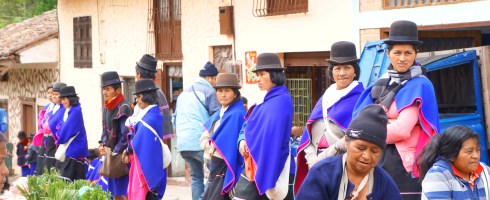
Life can seem hard when you’ve been selling onions every Tuesday for forty years at Silvia market. The old couple with weather-beaten faces sat silently together staring in different directions into the distance. They were traditional countryfolk whose survival hinged on the cultivation of fruit and vegetables on their small farm for personal consumption and to sell here at Silvia’s bustling weekly market. They were Guambiano people from one of the small mountain villages of Pueblito, Guambia, La Campana and Caciques and are considered to be one of the most traditional indigenous groups in all of Colombia.
The first taste of Colombia
19 Feb
For many years Colombia has found itself in the news for all the wrong reasons. It has been defined by civil war, high levels of crime, class ‘A’ drugs, gun-brandishing guerrillas and kidnappings. Governments all over the world advised against any kind of travel to the country and even the most daring of backpackers chose not to risk crossing the border from other South American countries where tourism was booming. During the last 10 years however, changes on a big scale have been sweeping across the country and Colombia has opened its doors to international tourism. Every person we met on our Latin America trip who had spent some time in Colombia raved about it and many described it as their favourite country in the whole Continent. We were very excited to discover Colombia’s riches for ourselves but we couldn’t shake a feeling of trepidation as we crossed into a world which had been hidden from the public view for so long.
Otavalo indigenous market
18 Feb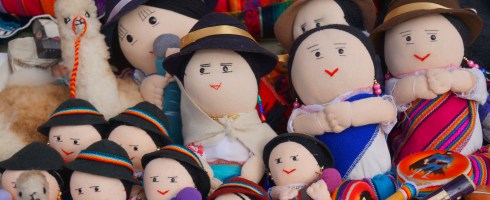
We were travelling from Quito, Ecuador’s capital, and heading across the border into Colombia. We decided to break the journey up with a stopover in Ecuador’s northern highlands and the small town of Otavalo was our choice. Otavalo is famous for its indigenous market, which dates back to pre-Inca times and is now the largest of its kind in the whole of South America. We were initially concerned that the whole town would be like one giant theatre production, where stone faced locals dress up for hordes of tourists to shamelessly flog them tacky reproduction handicrafts at rip off prices, but we were very wrong…so wrong in fact we ended up extending our stay in Ecuador by several days so we could discover more about the friendly and culturally rich Otavalenos (people from Otavalo) with their beautiful hand crafted products, and also to explore the rolling hills just a stones throw from the town.
Finding refuge on Volcano Cotopaxi
11 Feb
National Park Cotopaxi is a paradise for people who love nature and have a spirit for adventure. The 33,393 hectare park is Ecuador´s largest protected area and offers a mixture of woods, lake-land and high Andean Altiplano which is home to an abundance of animals and plant life. The highlight of the park is the perfectly conical and snow-covered volcano Cotopaxi which is Ecuador’s second highest peak at 5,897 metres. Cotopaxi is the world´s fifth highest active volcano and whilst its last major eruption took place in 1904, scientists and seismologists now monitor activity very closely, just waiting for the next big one. The scenery rendered us speechless…for once! Cotopaxi had turned her headlights on and we were caught staring into the full beam feeling like we had the whole park to ourselves. Continue reading
Quito – a city for everyone
5 Feb
We tapped our toes as we listened to the blind accordion player who stood under an arched alcove belonging to a brightly painted colonial mansion. We dug around in our pockets for some money and the coins which made a clinking sound at the bottom of his collection pot made first him, and then us, smile. We turned on the cobbles and wandered through Quito’s UNESCO World Heritage listed ‘old town’. It was a maze of restored colonial buildings, grand churches and fully functioning monasteries and convents. We passed some of the country’s best museums and grand squares where indigenous women carrying large bundles rested their weary bones on benches. Mouth-watering smells wafted from doorways of family run cafes where cauldrons of soup bubbled and cooks carved chunks of succulent meat from whole roasted pigs. Market stall vendors shouted in our ears as we passed and we declined repeated offers to sell us everything and anything. We felt like we’d stepped back in time with frenetic city life continuing uninterrupted as it had done for hundreds of years. The city belonged to no one and everyone – the tourists, the beggars, the nuns, the indigenous locals, the flea ridden dogs, the drivers of the smoke belching buses, the dirty street kids and the chefs preparing Ecuador’s finest cuisine – all existing side-by-side to make Quito one of Latin America’s most captivating capitals.
Quilatoa crater lake
29 Jan
A clapped out old bus with rattling windows, faded velour seats and a never ending soundtrack of Andean pan pipes dropped us off in the small settlement of Quilatoa. The indigenous farming village didn’t look like much, just a cluster of basic brick and tin roof homes, but we’d learnt that this was the access point to one of Ecuador’s most spectacular sights – the unbelievably beautiful volcanic crater lake, Quilatoa.
Mama Negra festival
25 Jan
A man, dressed as a woman, with a blacked up face and riding a horse sauntered past us. A group of traditional Ecuadorian dancers span around with perfect rhythm and exuded seemingly endless energy. Staggering to make ten steps forward, a strong guy collapsed onto a stool to take a breather from carrying a whole roasted pig on his back which was decorated with cooked guinea pigs, large bottles of strong spirits and packets of cigarettes! We were stunned, enthralled and thoroughly entertained – this could only be the Mama Negra festival, one of Ecuador’s biggest and most loved festivals, which combines traditional culture and folklore in a two-day long fiesta.
Adrenaline rush in Banos
18 Jan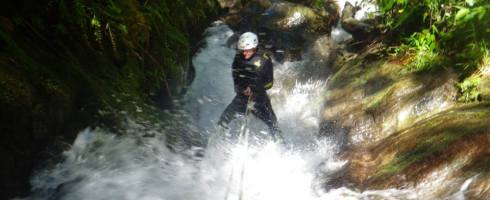
Picking a destination to pass a birthday whilst travelling is always a game of chance when your knowledge of that place is only informed by guide books or internet reviews, and the pressure you put upon yourself to make it a special and unforgettable birthday can start to mount. The town we’d chosen to spend my 34th birthday was called Banos – the Spanish word for bathroom – and I began to fret that we’d find ourselves celebrating in the urinals of Ecuador!
Welcome

Featured posts
-

Torres del Paine – the ‘W’ trek
Visitors from all walks of life converge on the small hamlet of Puerto Natales to visit Chile’s and perhaps the Continent’s number one national park – Torres del Paine. Located in the Southern Patagonian ice fields at the end of the Andes, the park offers diverse wildlife and incredible mountain scenery, glaciers, lakes, rivers and […]
 latin chattin'