
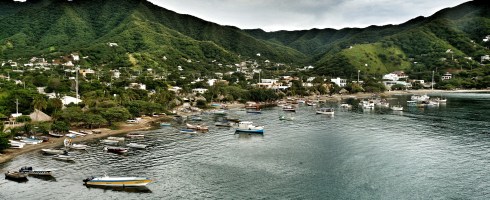
Arriving in the coastal village of Taganga feels something like stepping into the Twilight Zone. A world of contrasts – where brightly painted boats line the shore and fishermen darn their nets as they have done for centuries whilst simultaneously, scantily clad tourists dance the night away in beach front clubs to thumping tunes. This once tiny fishing village has been transformed in just a few years without much concern for the landscape or local heritage. Now proudly one of the most visited places on the Caribbean coast, Taganga has become infamous for its chilled beach culture by day and ‘party like there’s no tomorrow’ vibe at night. It’s a cross between a hippy retreat and a Club 18-30’s holiday! Despite the in your face hedonistic lifestyle, Taganga is a cool little place to spend a few days, and those who visit tend to stay longer than they intended. If you arrive with an open mind and remember the saying: ‘If you can’t beat them, join them’, you can’t help but have some fun!
A recipe for colonial beauty – Ville de Leyva
3 Apr
Take a good helping of cobblestones and mix well with white washed buildings topped by terracotta tiles. Add a pinch of colourful creeping plants and lightly stir in some locals steering horse-drawn carts. Make a space in the middle of your mixture for one of South America’s largest plazas and pour in a good amount of art and crafts. Whilst it’s warming in the temperate climate, sit back, relax, and breath in the aromas from French bakeries and cute coffee houses serving Colombia’s finest beans.
Wake up and smell the coffee – Colombia’s Zona Cafetera
3 Mar
Growing truly exceptional coffee is one of the things Colombians do best. In fact their coffee is considered to be amongst the greatest in the world so we fully expected to be left wide-eyed and shaky with the amount we intended to drink in the country’s renowned bean growing region, aptly named Zona Cafetera.
The right stuff – essential travel equipment
24 Feb
During our time travelling we’ve used a vast array of equipment and gadgets – some obvious, some less so. We’ve thought a few times that perhaps the most important piece of equipment is the humble roll of toilet paper in a Continent where you’ll often find it absent in public toilets, restaurants and sometimes even your hostel! OK, arguably not equipment in the true sense of the word but it does have the same qualities that we’re looking for in all of our travelling gear – it’s lightweight and portable, it’s reliable and hard-wearing, it’s there for you when you need it, it makes your life easier, and it doesn’t let you down!
Finding refuge on Volcano Cotopaxi
11 Feb
National Park Cotopaxi is a paradise for people who love nature and have a spirit for adventure. The 33,393 hectare park is Ecuador´s largest protected area and offers a mixture of woods, lake-land and high Andean Altiplano which is home to an abundance of animals and plant life. The highlight of the park is the perfectly conical and snow-covered volcano Cotopaxi which is Ecuador’s second highest peak at 5,897 metres. Cotopaxi is the world´s fifth highest active volcano and whilst its last major eruption took place in 1904, scientists and seismologists now monitor activity very closely, just waiting for the next big one. The scenery rendered us speechless…for once! Cotopaxi had turned her headlights on and we were caught staring into the full beam feeling like we had the whole park to ourselves. Continue reading
The Incredible Galapagos Islands
4 Jan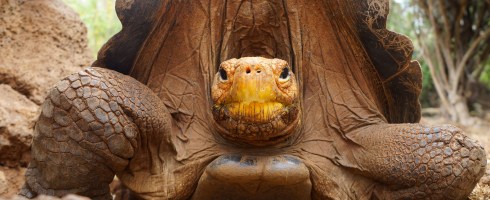
Imagine waking up in a parallel universe where animals rule the planet fearlessly and humans are consigned to the sidelines – gawping speechlessly with open mouths, only capable of pointing and clicking a camera over and over again. Where animals work in harmony allocating selected beaches for frolicking lava lizards, watery depths for giant manta rays and green highlands for wise, ancient tortoises, whilst humans push and shove over the same small patch of scrub land. Where hungry sparrows dine out on the same plates of food bought by humans, and sealions sprawl on promenade benches enjoying the sunshine. Imagine no further – this is the Galapagos – and these islands are like few other places to be found on Earth.
Riding a sand tsunami in Huacachina
10 Nov
We collapsed into a heap after climbing to the top of a 60 metre sand dune and paused to catch our breath. We stared in awe at the scene before us – immense, golden dunes and nestled in the middle a picturesque lagoon-filled oasis surrounded by palm trees. Huacachina was once a prestigious holiday destination for Peru’s rich elite, however, nowadays it’s a regular stop on the Gringo trail and an adventure theme park for international backpackers.
The mysterious Nazca Lines
1 Nov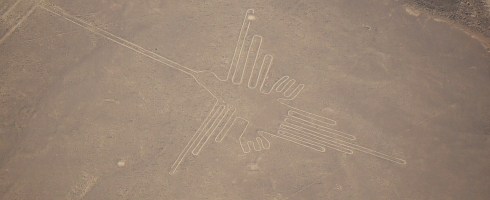
The mysterious Nazca Lines are spread over 500 square kilometres in a dusty, desert landscape in the South of Peru. The lines were first discovered in 1927 when a Peruvian archeologist, Toribio Mejia Xesspe, spotted them whilst walking in the nearby foothills, however, they were largely ignored by the outside world. In 1939, a historian from Long Island University in the United States took a flight over the area and upon seeing these giant lines and figures etched into the ground, he made it his duty to inform the world about them. Every year since, more formations have been discovered and there is presently a striking network of over 80 lines, 300 geometric figures and around 70 animals. In 1994 the site was honoured with UNESCO World Heritage status.
Welcome

Featured posts
-

Torres del Paine – the ‘W’ trek
Visitors from all walks of life converge on the small hamlet of Puerto Natales to visit Chile’s and perhaps the Continent’s number one national park – Torres del Paine. Located in the Southern Patagonian ice fields at the end of the Andes, the park offers diverse wildlife and incredible mountain scenery, glaciers, lakes, rivers and […]
 latin chattin'